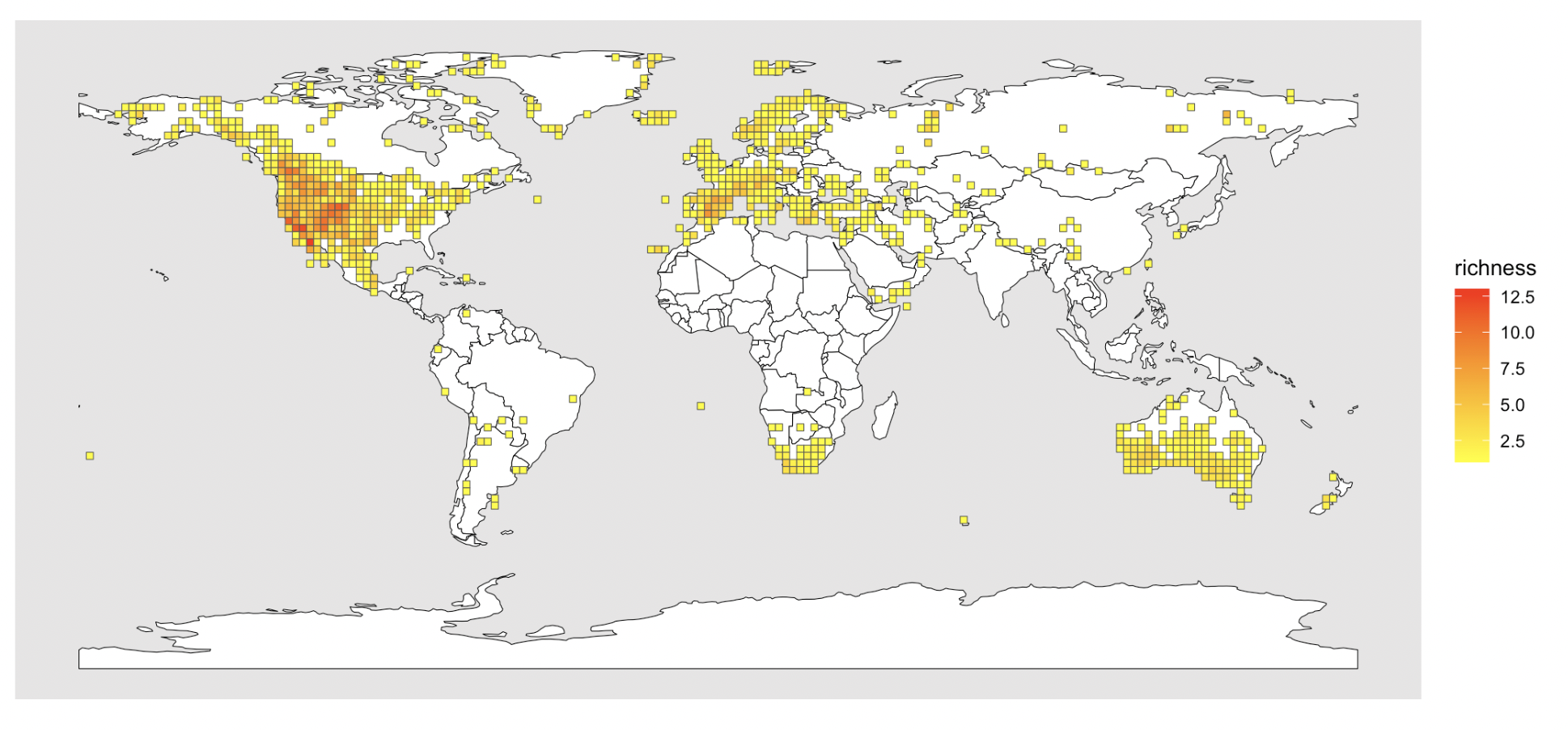
The Urban Lichen Toolbox
Published:
 I presented “The Urban Lichen Toolbox” at the 2026 Northeast Natural History Conference.
During this 20 minute presentation, I discussed five main tools to begin to see and appreciate urban lichens.
The “lichen eye”
The first step to appreciate lichens is to start to notice them in your everyday life. Dr. Klara Scharnagl refers to this as getting the ‘lichen eye’. “Once you start noticing lichens, you start to see them everywhere. Your eyes are opened, and all of a sudden, you will be surprised how many you’ll notice.” You can listen to the full description of the lichen eye in this Joyful Microbe Podcast episode: Introduction to Lichens: Dr. Klara Scharnagl.
Resources
“Urban Lichens : A Field Guide for Northeastern North America” is an excellent book to begin to identify different species of lichens in urban areas. Dr. Jessica Allen discusses this book in the In the Defense of Plants podcast episode: Urban Lichens.
There are also many free resources online to begin to appreciate and identify lichens including the websites Ways of Enlichenment and the Consortium of Lichen Herbaria.
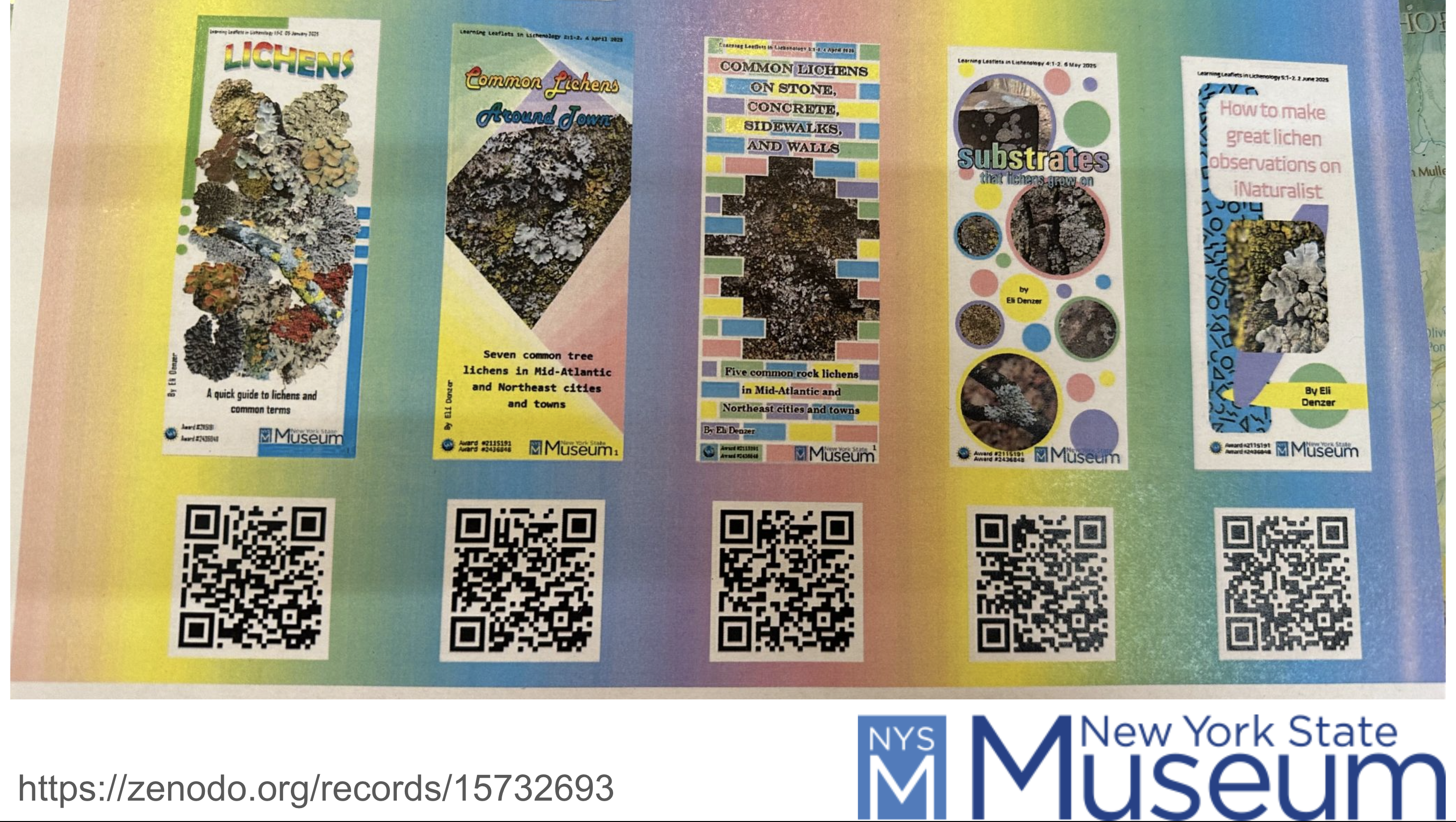
If you prefer to download and print out free guides, there are several available from the New York State Museum.
Lichens: A quick guide to lichens and common terms
Common Lichen Around Town: Seven common tree lichens in Mid-Atlantic and Northeast cities and towns
Common Lichens on Stone, Concrete, Sidewalks, and Walls
Substrates that Lichens Grow On
How to Make Great Lichen Observations on iNaturalist
Community
Learning to identify lichens can be challenging. There are online and in-person communities in many areas that provide useful local sugggestions and feedback. There is a list of lichen societies around the world available on the International Association for Lichenology website. In eastern North America, we have the Eastern Lichen Network. There are also several local mycology clubs that also lead occasional lichen walks, such as the Philadelphia Mycological Club and the New Jersey Mycological Association.
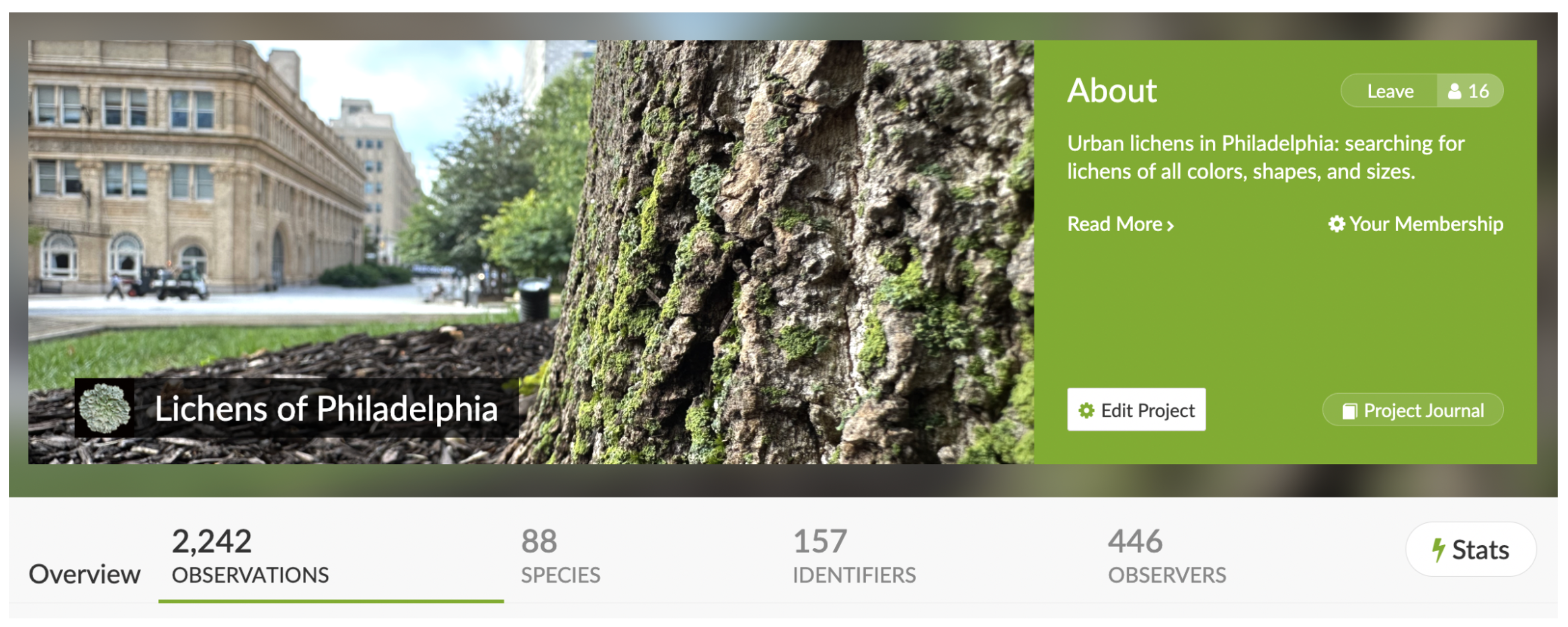 Example online community project “Lichens of Philadelphia”
There are active online lichen communities through platforms including iNaturalist, Facebook, Reddit… and many more social medias. I often post and identify lichen observations on iNaturalist. This platform allows for questions and responses between users. Depending on the region and lichen group, different online communities may be more helpful.
Gadgets
Some lichen species can be identified without tools. However, many species require additional magnification or chemical analysis in order to confirm their id.
The best beginnger friendly gadget is a hand lens. “A 10x magnification hand lens will be more than adequate for most purposes. Higher magnification lenses tend to be harder to use but are very useful for viewing extremely small objects.” -Jon Flynn of the Natural History Book Service.
When you get deeper into lichenology, other gadgets become essential. For more detailed resources check out “Tools and chemicals” recommended by the Northwest Lichenologists.
Perspective
The field of lichenology is changing continuously. Printed field guides and references may become outdated within a few years if additional literature has been published online.
According to authors of The coming golden age for lichen biology, “There is a substantial opportunity now in the study of lichens. This is a subject area where big biological questions are waiting to be answered.”